Top SaaS Tools 2026: 10 Proven Best Platforms to Supercharge Growth

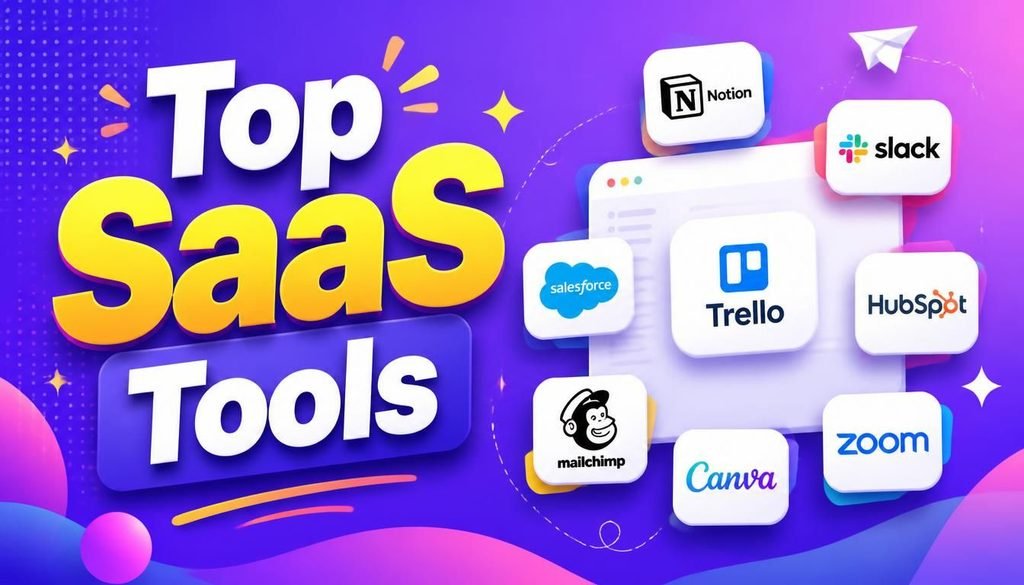
Software as a Service (SaaS) has completely reshaped how modern companies and independent professionals operate. Instead of purchasing expensive perpetual licenses and installing massive desktop applications, businesses now access cloud-hosted tools through web browsers and mobile apps with flexible monthly subscriptions.
In 2026, the SaaS ecosystem is more powerful than ever. Platforms seamlessly integrate generative AI assistants, automated workflow builders, real-time collaboration spaces, and deep data analytics.
However, this abundance of choice brings a distinct operational challenge: subscription fatigue. Accumulating dozens of unnecessary software subscriptions increases overhead costs and fragments daily communication.
Selecting the top SaaS tools 2026 is not about adopting every trendy application on the market—it is about curating a lean, highly integrated software stack that solves your primary workflow bottlenecks.
In this comprehensive guide, we review the top SaaS tools 2026 across major business categories and provide actionable frameworks to select the right software without overspending.
What Is SaaS and Why Does It Matter in 2026?
SaaS stands for Software as a Service. Cloud providers host, maintain, and secure the application on their remote servers, granting users instant access over the internet.
Key advantages of adopting modern SaaS solutions include:
- Multi-Device Accessibility: Work seamlessly from laptops, tablets, or smartphones without manual data syncing.
- Continuous Updates: Access new features, security patches, and performance enhancements instantly without downloading installers.
- Predictable Scalability: Add or remove user seats as your team grows or shrinks.
As generative AI becomes standard across enterprise software, evaluating the top SaaS tools 2026 requires looking at how platforms leverage automation to eliminate repetitive administrative work.
The Top SaaS Tools 2026 Across Essential Categories
No single platform satisfies every business operational requirement. Below are the standout software solutions leading their respective categories in 2026.
1. Microsoft 365 — Best All-Around Enterprise Productivity Suite
Microsoft 365 continues to be the dominant workspace suite for businesses that require robust desktop integration and advanced data compliance.
Key Features:
- Core productivity tools: Word, Excel, PowerPoint, and Outlook
- Enterprise communication via Microsoft Teams and cloud storage through OneDrive
- Advanced AI features integrated directly into document creation and email management
Best For: Corporations, financial institutions, and established teams heavily reliant on traditional document workflows.
2. Google Workspace — Best for Real-Time Cloud Collaboration
Google Workspace remains a leading cloud-native productivity platform, empowering distributed teams to create and edit documents simultaneously without version control confusion.
Key Features:
- Seamless browser-based apps: Gmail, Google Docs, Sheets, Slides, and Google Meet
- Centralized file sharing and permission controls via Google Drive
- Frictionless third-party integrations with project management systems
Best For: Fast-moving startups, remote teams, and creative agencies prioritizing browser-first collaboration.
For a deeper dive into scaling cloud infrastructures, explore our complete Cloud Computing Guide for Small Businesses.
3. Slack — Best for Real-Time Team Communication
Slack transformed workplace messaging by organizing conversations into structured channels based on projects, departments, or topics.
Key Features:
- Public and private discussion channels with thread management
- Direct file sharing, voice huddles, and searchable message history
- Integrations with thousands of SaaS applications to centralize system notifications
Best For: Technology companies, remote startups, and cross-functional teams looking to reduce internal email traffic.
4. Asana — Best Structured Project Management Platform
Asana excels at converting high-level business goals into actionable, trackable team tasks. It remains one of the top SaaS tools 2026 for structured work management.
Asana
Key Features:
- Multiple project views: Kanban boards, Gantt chart timelines, and calendar layouts
- Automated task assignment and dependency tracking
- Executive portfolio dashboards linking daily tasks directly to company goals
Best For: Medium-to-large marketing, operations, and product teams needing transparent project tracking.
5. monday.com — Best for Customizable Workflows
monday.com provides an intuitive, highly visual “Work OS” that allows non-technical teams to design custom workflow pipelines. Recent 2026 market performance reports highlight its rapid AI expansion as enterprise adoption accelerates.
thefrontkit+ 1
┌─────────────────────────────────────────────────────────────┐
│                      monday.com Work OS                     │
├──────────────────┬──────────────────┬───────────────────────┤
│ Sales Pipelines  │ Project Tracking │ Marketing Automations │
└──────────────────┴──────────────────┴───────────────────────┘
Key Features:
- Drag-and-drop custom status boards and color-coded columns
- Built-in automation rules for status updates, notifications, and assignments
- Deep AI capabilities for automated column summary generation and data extraction
Best For: Operations-led teams wanting maximum flexibility without writing code.
6. Notion — Best for Internal Knowledge and Documentation
Notion combines wikis, docs, notes, and lightweight databases into a single, highly customizable canvas.
Key Features:
- Centralized company knowledge bases and employee onboarding portals
- Interlinked relational databases for content calendars and task boards
- Integrated AI assistant for summarizing meeting notes and drafting content
Best For: Freelancers, creators, and agile startups building a “single source of truth” for internal docs.
7. ClickUp — Best All-in-One Work Platform
ClickUp aims to replace multiple standalone apps by offering tasks, docs, goal tracking, whiteboards, and time logging inside one system.
thefrontkit
Key Features:
- Multi-view task management (List, Board, Gantt, Workload, Mind Maps) thefrontkit
- Native document editing linked directly to task cards
- Generous feature set relative to per-seat subscription pricing thefrontkit
Best For: Growing teams looking to consolidate subscriptions and lower overall software costs.
8. HubSpot CRM — Best for Inbound Sales and Marketing
Managing client relationships through manual spreadsheets becomes unmanageable as customer volume grows. HubSpot CRM automates customer lifecycle tracking from initial lead capture to closed deals.
Key Features:
- Visual deal pipelines tracking prospect engagement stage-by-stage
- Automated email sequencing and meeting scheduling links
- Centralized communication logs capturing customer emails and calls
Best For: Growing sales teams, service agencies, and B2B SaaS companies.
9. Dedicated Cloud Invoicing and Financial SaaS
Streamlining cash flow relies on software that automates invoice creation, payment tracking, and financial reporting.
Selecting dedicated financial tools allows freelancers and small business owners to accept online credit card payments and issue automated payment reminders seamlessly.
To evaluate top zero-cost financial platforms, read our detailed review on the Best Free Invoicing Software Tools for Freelancers and Small Businesses in 2026.
10. AI-Powered Workflow SaaS Tools
Generative AI has evolved from novelty chat interfaces into core infrastructure across the top SaaS tools 2026 list.
Primary Enterprise Use Cases:
- Customer Support: Automated AI agents resolving support tickets instantly
- Code Generation: Developer assistants accelerating software build cycles
- Data Extraction: Automated parsing of financial invoices and legal contracts
Before upgrading to AI add-ons, test whether the automation saves measurable hours or directly cuts operational costs.
Comparison Table: Top SaaS Tools 2026
| Software Tool | Primary Category | Core Strength | Free Tier Available? |
|---|---|---|---|
| Microsoft 365 | Office Productivity | Desktop application integration | ❌ Trial Only |
| Google Workspace | Cloud Collaboration | Real-time multi-user editing | ❌ Trial Only |
| Slack | Team Messaging | App integration ecosystem | ✅ Yes |
| Asana | Project Management | Enterprise goal alignment | ✅ Yes |
| monday.com | Workflow OS | Visual pipeline flexibility | ✅ Yes |
| Notion | Knowledge Management | All-in-one wikis & docs | ✅ Yes |
| ClickUp | Consolidated Work | Maximum features per dollar | ✅ Yes |
| HubSpot | CRM & Sales | Free contact management | ✅ Yes |
How to Build a Lean SaaS Stack Without Overspending
To avoid software sprawl, apply these strategic rules before adding new recurring subscriptions:
1. Pinpoint the Specific Problem First
Avoid subscribing to software simply because of industry hype. Define the exact operational gap:
- Communication breakdowns? Deploy dedicated team messaging.
- Missed project deadlines? Implement structured project management.
- Data security vulnerabilities? Audit your cloud configuration.
To ensure your cloud accounts remain protected against credentials leaks, review our guide on Why Cloud Security Is Essential for Startups.
2. Audit Tool Integrations
Ensure your new software connects smoothly with your existing stack via native integrations or automation platforms like Zapier. Native integrations remove manual data entry and keep information synced across tools.
3. Review Seat Limits and Pricing Tiers
Watch out for per-seat pricing models that require minimum team sizes or lock key features behind expensive upper tiers. Always calculate the total annual cost for your entire team before committing.
thefrontkit
Essential SaaS Selection Checklist
- [ ] Core Utility: Does this tool solve a daily operational problem?
- [ ] User Adoption: Is the user interface easy enough for the team to adopt quickly?
- [ ] Integration Capability: Does it connect natively to our core messaging and storage platforms?
- [ ] Security Controls: Does the platform support Multi-Factor Authentication (MFA) and single sign-on (SSO)?
- [ ] Data Portability: Can we easily export our data if we decide to change vendors later?
Final Thoughts
The top SaaS tools 2026 are designed to streamline operations, clear communication bottlenecks, and eliminate repetitive admin work. Whether you build your stack around Google Workspace, organize projects in Asana, or structure custom workflows in monday.com, focus on tools that deliver clear, measurable value.
Asana
Start lean, eliminate duplicate software subscriptions, and expand your SaaS stack only when your business growth demands it.
Frequently Asked Questions (FAQs)
What is the difference between SaaS and traditional software?
Traditional software requires local installation on physical computers, along with manual updates and one-time licensing fees. SaaS is hosted in the cloud, accessed through web browsers, automatically updated, and billed via predictable subscriptions.
How can small businesses prevent SaaS overspending?
Conduct quarterly software audits to identify inactive user accounts, eliminate duplicate apps (e.g., paying for both ClickUp and Asana simultaneously), and switch to annual billing plans for core tools to receive discounts.
Are cloud-based SaaS tools secure for handling sensitive client data?
Reputable SaaS providers implement enterprise encryption, regular security audits, and strict compliance controls. However, businesses must enforce strong user access policies, mandatory MFA, and role-based access permissions on their end.
Share Your Experience
Which applications make up your daily software stack in 2026? Are you trying to consolidate your subscriptions, or have you discovered an essential AI tool that saves hours every week? Share your recommendations and questions in the comments below!



3 Comments