Supervised vs Unsupervised vs Reinforcement Learning: 2026 Guide!

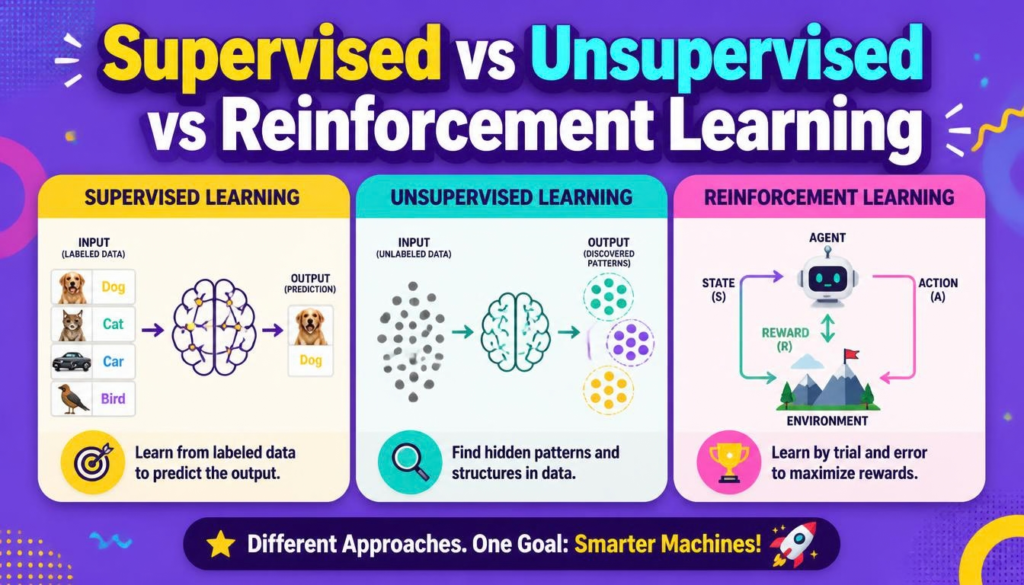
Artificial intelligence powers almost every modern web service, from recommendation algorithms on streaming sites to automated financial fraud filters. Underneath these smart capabilities lies machine learning—the process of training software algorithms to spot trends, predict outcomes, and adapt over time. But if you’re exploring data science or software engineering, you quickly discover that machine learning isn’t just a single technique. A deep comparison of supervised vs unsupervised vs reinforcement learning reveals how different algorithmic strategies tackle real-world data challenges.
Understanding the core differences between supervised vs unsupervised vs reinforcement learning is essential for selecting the right model architecture for your data pipeline. Each training paradigm handles information differently, addresses distinct business challenges, and requires a tailored approach to data collection and model evaluation.
What Is Machine Learning in Practice?
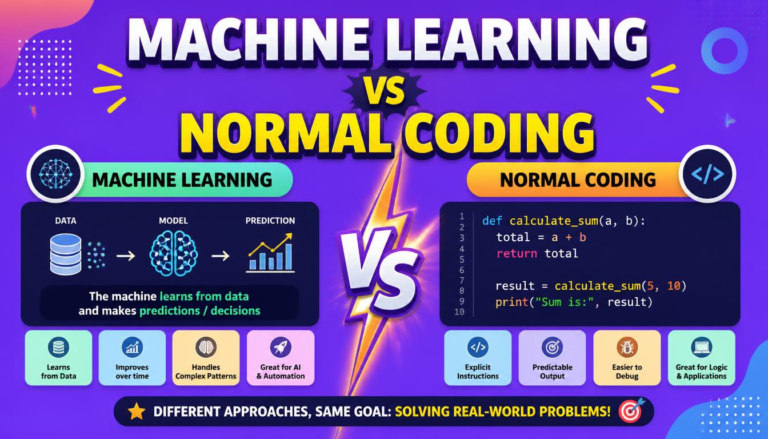
Rather than writing thousands of rigid if/else statements by hand, developers train statistical models on raw data. The software evaluates sample inputs, measures performance against targeted outcomes, and adjusts its internal parameters automatically.
┌─────────────────────────────────────────────────────────────┐
│                 Machine Learning Pipeline                   │
├─────────────────────────────────────────────────────────────┤
│ Input Data ──> Feature Extraction ──> Model ──> Output      │
└─────────────────────────────────────────────────────────────┘
The fundamental choice when building intelligent applications comes down to supervised vs unsupervised vs reinforcement learning—specifically, how your system ingests information and processes feedback during training.
1. Supervised Learning: Learning From Answers
In a supervised learning model, the algorithm learns from a labeled dataset. Think of it as a student studying with a complete answer key right next to the practice exam.
┌─────────────────────────────────────────────────────────────┐
│                 Supervised Learning Loop                    │
├─────────────────────────────────────────────────────────────┤
│ Input Data + Ground Truth Labels ──> Train ──> Prediction   │
└─────────────────────────────────────────────────────────────┘
The model examines thousands of inputs (features) along with their known outcomes (labels) until it recognizes underlying correlations. When presented with completely new, unseen data, it predicts the correct label based on prior training.
Core Supervised Tasks
- Classification: Assigning inputs to specific discrete categories (e.g., marking emails as spam/not spam or categorizing medical scans).
- Regression: Estimating continuous numerical values (e.g., forecasting house prices or calculating delivery arrival times).
When evaluating supervised vs unsupervised vs reinforcement learning for predictive tasks with historical records, supervised approaches offer the highest accuracy and easiest performance verification.
2. Unsupervised Learning: Discovering Hidden Structure
Unsupervised learning works with completely unlabeled datasets. The algorithm is given raw data and asked to discover natural groupings, hidden structures, or unusual anomalies without human guidance.
┌─────────────────────────────────────────────────────────────┐
│                Unsupervised Learning Loop                   │
├─────────────────────────────────────────────────────────────┤
│ Unlabeled Raw Dataset ──> Pattern Discovery ──> Clusters    │
└─────────────────────────────────────────────────────────────┘
Imagine giving someone a mixed bucket of colored buttons without any instructions. They might naturally group them by shape, color, or material. That is unsupervised learning in action.
Core Unsupervised Tasks
- Clustering: Grouping similar data points together (e.g., segmenting e-commerce customers based on purchasing habits).
- Dimensionality Reduction: Compressing complex datasets with hundreds of variables into simpler formats while retaining critical insights.
- Anomaly Detection: Spotting unusual events or outliers that deviate from standard baseline behavior.
When comparing supervised vs unsupervised vs reinforcement learning for exploratory data analysis, unsupervised algorithms excel at uncovering customer trends you didn’t even know to look for.
3. Reinforcement Learning: Learning Through Trial & Error
Reinforcement learning takes a fundamentally different path. An autonomous software agent learns by interacting directly with a dynamic environment through continuous action and feedback loops.
┌─────────────────────────────────────────────────────────────┐
│               Reinforcement Learning Loop                   │
├─────────────────────────────────────────────────────────────┤
│ Agent Action ──> Environment ──> State Change + Reward/Penalty│
└─────────────────────────────────────────────────────────────┘
The agent attempts an action, observes the new environment state, and receives feedback in the form of rewards (for desirable moves) or penalties (for mistakes). Over millions of trial iterations, it formulates an optimal strategy (policy) to maximize cumulative rewards.
Key Applications
- Autonomous Systems: Navigating self-driving vehicles and robotic arms safely.
- Sequential Decision Engines: Controlling industrial energy grids, managing warehouse logistics, and optimizing dynamic ad placements.
Understanding supervised vs unsupervised vs reinforcement learning helps engineers realize that reinforcement models are built specifically for environments where decision sequences matter more than single static predictions. If you’re building automated decision loops or exploring real-time algorithmic execution, reading about automated trading bot strategies shows how low-latency logic operates under fast-changing market conditions.
Comparing the Three Approaches
Evaluating supervised vs unsupervised vs reinforcement learning side-by-side highlights how each paradigm processes data:
| Feature | Supervised Learning | Unsupervised Learning | Reinforcement Learning |
| Data Format | Labeled training records | Unlabeled raw datasets | Environment states & signals |
| Primary Goal | Predict categorical/numeric outputs | Discover hidden clusters & patterns | Learn optimal decision policies |
| Feedback Loop | Direct target label verification | No explicit label feedback | Rewards and penalty scores |
| Common Tasks | Classification, Regression | Clustering, Anomaly Detection | Action sequences, Robotics |
| Human Effort | High (manual data labeling) | Medium (data curation & interpretation) | High (reward function design) |
Analyzing these trade-offs within supervised vs unsupervised vs reinforcement learning allows software architects to choose the most cost-effective training strategy.
Real-World Engineering Applications
To see how supervised vs unsupervised vs reinforcement learning functions across production environments, consider these real-world tech implementations:
- Financial Fraud Prevention: Banks use supervised algorithms to detect fraudulent charges based on past flagged transactions, while using unsupervised clustering to catch brand-new fraud patterns.
- E-Commerce & Media Personalization: Streaming platforms employ unsupervised models to group users with similar watch histories, while reinforcement agents optimize dynamic thumbnail delivery in real time.
- Healthcare & Medical Imaging: Supervised classification helps radiologists identify tumors in diagnostic scans, while unsupervised models group patient gene sequences to accelerate drug research.
To explore open-source model libraries, evaluation metrics, and implementation tutorials for these frameworks, check out the documentation on Scikit-Learn.
How to Choose the Right Approach
Selecting between supervised vs unsupervised vs reinforcement learning comes down to three basic operational questions:
┌─────────────────────────────────────────────────────────────┐
│                 Model Selection Flowchart                   │
├─────────────────────────────────────────────────────────────┤
│ Do you have labeled targets? ──> YES ──> Supervised         │
│ Want to uncover groups/patterns? ──> YES ──> Unsupervised   │
│ Need sequence-based decision loops? ──> YES ──> Reinforcement│
└─────────────────────────────────────────────────────────────┘
- Do you possess ground-truth labels? If your dataset has historical target outputs (like spam vs non-spam flags or past sale prices), start with supervised learning.
- Are you trying to explore unorganized data? If you have raw telemetry, clickstreams, or customer profiles without pre-assigned labels, unsupervised learning provides immediate structure.
- Is your system making sequential choices in a changing environment? If your software must take sequential actions where early choices impact future outcomes, reinforcement learning is the correct framework.
Hybrid Machine Learning Approaches
Production AI architectures rarely rely on a single isolated methodology. Advanced data pipelines frequently blend paradigms, proving that mastering supervised vs unsupervised vs reinforcement learning leads to creative hybrid implementations:
- Semi-Supervised Learning: Combining a small set of labeled data with a large pool of unlabeled records to cut data annotation costs.
- Self-Supervised Learning: Training models to predict missing parts of an unlabeled dataset, forming the backbone of modern large language models (LLMs).
- Reinforcement Learning from Human Feedback (RLHF): Fine-tuning generative AI models using human preference ratings to improve safety and response quality.
Understanding supervised vs unsupervised vs reinforcement learning equips you with the foundational framework needed to navigate modern machine learning architectures. By matching your business problem with the right data structure and feedback model, you build more accurate, resilient, and scalable AI solutions.
Which paradigm from supervised vs unsupervised vs reinforcement learning are you currently implementing in your tech projects? Share your experiences or technical questions in the comments below!