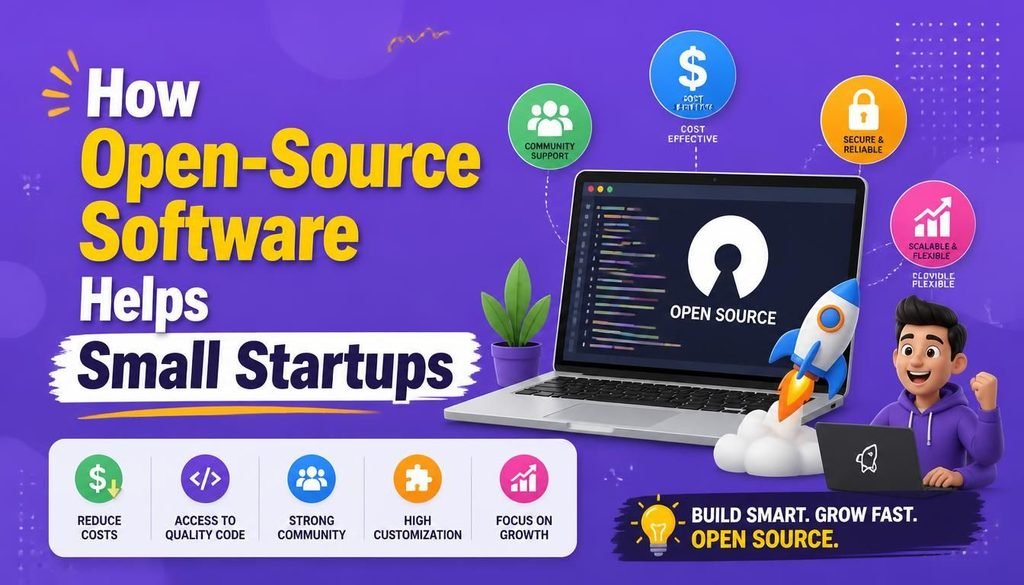
How Open-Source Software Helps Small Startups in 2026: Proven Advantages

Launching a startup is an exhilarating journey, but it also comes with practical operational challenges. Limited budgets, small teams, and tight deadlines force ambitious founders to make careful technology decisions. Every dollar saved on software licenses can be directly invested into core product development, customer acquisition, or hiring talented engineers.
One of the smartest strategic decisions a modern startup can make is adopting open-source solutions. Instead of spending thousands of dollars on expensive proprietary licenses, entrepreneurs rely on reliable, community-supported technologies to power websites, mobile applications, cloud infrastructure, and internal tools.
Understanding how open-source software helps small startups allows founders to build enterprise-grade systems without facing prohibitive fees. From powerful web servers and databases to advanced programming frameworks and artificial intelligence tools, open-source technology provides a strong foundation for rapid innovation.
This practical guide explains how open-source software helps small startups, highlighting key advantages, essential software categories, potential challenges, and actionable best practices to build a scalable technology stack.
What Is Open-Source Software?
Open-source software (OSS) refers to technology built with publicly accessible source code. Developers can freely inspect, modify, enhance, and distribute the code according to the specific open-source license.
Unlike proprietary commercial software, open-source tools are typically maintained by active communities of independent developers, tech companies, and passionate contributors worldwide.
Popular examples used by startups daily include:
- Operating Systems & Servers: Linux, NGINX
- Databases: PostgreSQL, MySQL
- Cloud & DevOps: Docker, Kubernetes
- Languages & Frameworks: Python, Node.js, React
- Content & Code Tools: WordPress, Git, VS Code
These robust solutions provide high reliability, helping early-stage companies launch mission-critical applications smoothly.
1. Drastically Lower Software Infrastructure Costs
The primary reason founders research how open-source software helps small startups is financial efficiency. Traditional proprietary software requires substantial financial commitments, such as monthly per-user subscriptions, costly annual software licenses, mandatory upgrade fees, and expensive vendor support contracts.
Open-source technologies eliminate many of these recurring licensing costs.
By reducing monthly software expenses, startups can reallocate capital toward critical growth areas:
- Accelerating primary product development
- Expanding digital marketing and customer acquisition
- Providing top-tier customer support
- Hiring specialized technical talent
Lowering initial burn rates gives startups a longer financial runway to achieve profitability.
2. Faster Product Development and Time-to-Market
Speed is everything for early-stage companies. Another core advantage in how open-source software helps small startups is the ability to launch products faster.
Open-source ecosystems offer thousands of pre-built frameworks, component libraries, and ready-to-use tools. Instead of spending months writing basic functionality from scratch—such as user authentication, database management, or payment gateways—developers can leverage existing, battle-tested code.
This allows your engineering team to focus entirely on building unique, value-adding features that set your product apart. Furthermore, comprehensive documentation and active support communities make solving technical bottlenecks much easier.
3. High Flexibility and Customization Freedom
Every startup has unique workflows and product requirements. Proprietary software often restricts customization, forcing businesses to adapt their processes to vendor limitations.
In contrast, exploring how open-source software helps small startups reveals unmatched architectural freedom. Because development teams have full access to the source code, they can:
- Customize core functionality to fit specific business logic
- Strip away unnecessary, bloated features to improve speed
- Build custom third-party tool integrations
- Optimize code performance for specific workloads
This level of customization allows startups to create tailored experiences that match their long-term vision.
4. Strong Global Community Support
Established open-source projects thrive on vibrant global communities. When evaluating how open-source software helps small startups, community support stands out as a major benefit.
Active open-source communities continuously contribute:
- Comprehensive guides and video tutorials
- Free plugins, modules, and extensions
- Rapid bug reports and code fixes
- Continuous security updates
When technical challenges arise, developers can usually find solutions quickly on public forums, developer groups, or official project repositories like GitHub , keeping development moving forward smoothly.
5. Enhanced Security Through Transparent Code
A common misconception among new business owners is that open-source software is less secure than proprietary software. In reality, public code visibility often leads to faster security resolutions.
Because open-source code is accessible to developers and security researchers worldwide:
- Security vulnerabilities are identified and reported early.
- Community patches and fixes are released rapidly.
- Independent security experts can perform thorough code audits.
- Organizations can verify data privacy compliance directly.
To learn more about modern software design principles and security practices, read our guide on Latest Software and AI Tech Trends.
6. Seamless Cloud Native Deployment
Modern startups build applications designed for the cloud. A major factor in how open-source software helps small startups scale is its natural compatibility with cloud architecture and automated DevOps tools.
Core open-source cloud tools include:
- Docker: Simplifies application packaging into lightweight containers.
- Kubernetes: Automates container deployment and management.
- Linux Infrastructure: Powers the vast majority of cloud servers worldwide.
- PostgreSQL: Delivers reliable data storage for complex applications.
Using open-source cloud tools allows startups to scale applications effortlessly across cloud providers like AWS, Google Cloud, or Microsoft Azure.
7. Reduced Risk of Vendor Lock-In
Relying on proprietary software vendors carries long-term risks. If a vendor suddenly hikes pricing, changes terms, or discontinues a service, migration can be complex and expensive.
Understanding how open-source software helps small startups highlights the value of vendor independence. With open-source tools, startups retain control over:
- Their proprietary data and customer records
- Hosting infrastructure choices (cloud, multi-cloud, or on-premise)
- Custom feature implementations and code changes
- Long-term software maintenance schedules
This architectural independence ensures your company retains full control over its technology stack as it grows.
Popular Open-Source Categories for Startups
| Category | Popular Open-Source Tools | Primary Business Benefit |
|---|---|---|
| Operating Systems | Linux (Ubuntu, Debian) | Stable, low-cost server environments |
| Web Servers | NGINX, Apache | High-performance website and API hosting |
| Databases | PostgreSQL, MySQL, Redis | Secure, high-speed data management |
| Development | Python, Node.js, React | Rapid application development |
| DevOps & Containers | Docker, Kubernetes | Scalable cloud deployment |
| Content Management | WordPress | Flexible website building |
Potential Challenges and How to Overcome Them
While the advantages are clear, evaluating how open-source software helps small startups also means addressing potential implementation challenges:
- Initial Learning Curves: Some open-source infrastructure tools require developer training.
- Self-Managed Support: Commercial support is not always available for smaller projects; teams rely on community documentation.
- Maintenance Responsibility: Your technical team must manage software updates, security patches, and server configurations.
Solution: Select well-maintained open-source projects with large developer communities, clear documentation, and active update schedules.
Best Practices for Implementing Open-Source Software
To maximize benefits while minimizing risks, follow these essential guidelines:
- Choose Mature Projects: Opt for software backed by active communities and regular update cycles.
- Prioritize Updates: Apply security patches and system updates promptly to keep infrastructure safe.
- Automate Dependency Scanning: Use automated scanning tools to catch code vulnerabilities early.
- Review Software Licenses: Ensure project licenses (e.g., MIT, Apache 2.0, GPL) align with your commercial goals.
- Document Your Stack: Maintain clear internal technical documentation for smooth team onboarding.
Future Trends in Open-Source Technology
Open-source software continues to shape modern technology. Key trends driving startup growth include:
- Open-Source AI & Machine Learning: Accessible AI models and automation frameworks empower startups to build smart features without enterprise budgets.
- Cloud-Native Innovation: Serverless and containerized open-source tools make cloud management more efficient.
- Enhanced Supply Chain Security: Automated tools help teams verify the safety of open-source dependencies before deployment.
These trends ensure open-source technology remains a strong growth engine for innovative companies.
Practical Checklist for Startup Founders
| Task | Objective | Status |
|---|---|---|
| Audit Needs | Identify proprietary tools that can be replaced with open-source options | ✅ |
| Select Tools | Choose well-documented, community-backed open-source projects | ✅ |
| Verify Licensing | Ensure licenses align with your product’s commercial model | ✅ |
| Set Up Security | Implement automated security patch scanning for dependencies | ✅ |
| Document Infrastructure | Create clear internal developer guides for your open-source stack | ✅ |
Final Verdict
Understanding how open-source software helps small startups gives founders a major advantage in today’s competitive tech landscape. Open-source solutions allow small teams to lower costs, launch products faster, maintain high security standards, and scale infrastructure without vendor lock-in.
By choosing mature open-source tools, keeping software updated, and following development best practices, your startup can build flexible, enterprise-grade applications while keeping operational costs manageable.
Embracing open-source technology empowers your business to innovate freely and compete effectively at any scale!
Frequently Asked Questions (FAQs)
Is open-source software completely free for commercial use?
Most open-source software is free to use commercially under flexible licenses like MIT or Apache 2.0. However, always review specific license terms to ensure full compliance with your product’s architecture.
How does open-source software help startups scale?
Open-source platforms like Linux, Docker, and PostgreSQL scale efficiently across cloud servers without triggering high licensing fees as user traffic grows.
Is open-source software secure enough for modern business applications?
Yes. Because open-source code is publicly audited by global developers and security researchers, vulnerabilities are often identified and patched faster than in proprietary systems.
Share Your Thoughts
Has your startup adopted open-source software, or are you planning to integrate open-source tools into your technology stack? Share your experience, ask questions, or recommend your favorite developer tools in the comments below!