How AES-256 Encryption Works: 10 Best Proven Steps (2026)

When you send a private message, store files in the cloud, enter a password, or protect sensitive business data, you want that information to stay completely private. One of the primary global technologies that makes digital security possible is advanced cryptography. Understanding how AES-256 encryption works helps everyday users, IT managers, and business owners select the right tools to secure their digital footprint.
A widely used cryptographic benchmark across software applications is AES-256.
You may frequently encounter terms like “AES-256 data protection” when reading about cloud storage, password managers, virtual private networks (VPNs), encrypted backups, or enterprise infrastructure. While the terminology sounds highly technical, learning how AES-256 encryption works is simpler than it appears.
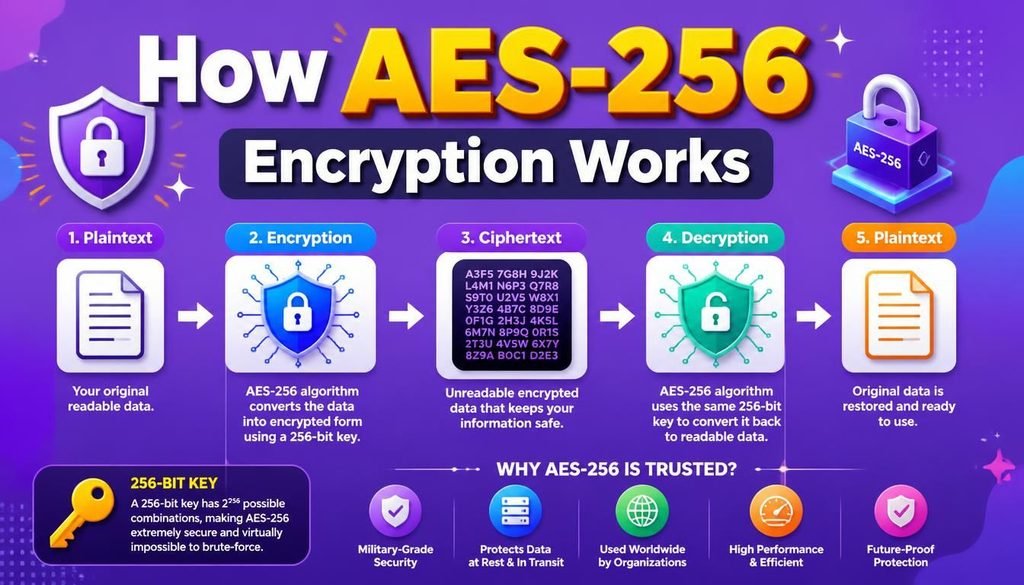
In plain English, understanding how AES-256 encryption works comes down to recognizing how readable data transforms into unreadable ciphertext using a secret 256-bit key. Only authorized parties holding the exact mathematical key can decrypt the information back into its original form.
This guide explains how AES-256 encryption works step-by-step: what “256” means, how symmetric key generation operates, real-world deployment modes, and what AES-256 can and cannot protect in 2026.
What Is AES-256 Data Protection?
AES stands for Advanced Encryption Standard. It is a symmetric cryptographic algorithm recognized worldwide by security experts and government standards bodies like the NIST Cybersecurity Framework.
┌─────────────────────────────────────────────────────────────┐
│                 AES Encryption Architecture                 │
├──────────────────┬──────────────────┬───────────────────────┤
│ AES-128 Bit Key  │ AES-192 Bit Key  │ AES-256 Bit Key       │
│ 10 Transformation│ 12 Transformation│ 14 Transformation     │
│ Rounds           │ Rounds           │ Rounds                │
└──────────────────┴──────────────────┴───────────────────────┘
When evaluating how AES-256 encryption works, it is important to know that AES supports three standardized key sizes:
- AES-128: Uses a 128-bit key across 10 processing rounds.
- AES-192: Uses a 192-bit key across 12 processing rounds.
- AES-256: Uses a 256-bit key across 14 processing rounds.
AES-256 utilizes the largest key size among these standards. The number 256 refers specifically to the size of the cryptographic key in bits. It does not mean your file is encrypted 256 individual times.
A clear visual representation of how AES-256 encryption works is:
$$\text{Readable Data (Plaintext)} + \text{Secret 256-bit Key} \longrightarrow \text{Encrypted Data (Ciphertext)}$$
And during recovery:
$$\text{Encrypted Data (Ciphertext)} + \text{Correct Secret 256-bit Key} \longrightarrow \text{Original Plaintext}$$
How AES-256 Encryption Works in Simple Terms
Imagine you have a confidential business document containing sensitive text such as “The annual report is ready.” Without protective measures, any unauthorized person who accesses the network or storage drive can read this plaintext.
Examining how AES-256 encryption works reveals how plaintext transforms into scrambled ciphertext, which appears as completely random characters to an attacker.
┌─────────────────────────────────────────────────────────────┐
│                Encryption & Decryption Flow                 │
├─────────────────────────────────────────────────────────────┤
│ Plaintext ──► [AES-256 Algorithm + Secret Key] ──► Ciphertext│
│                                                             │
│ Ciphertext ──► [Decryption Engine + Secret Key] ──► Plaintext│
└─────────────────────────────────────────────────────────────┘
When an authorized system requires access to the original information, applying the exact decryption key reverses the mathematical transformation instantly.
What Does the “256” in AES-256 Mean?
The “256” in AES-256 represents the cryptographic key length in bits. A 256-bit key contains $2^{256}$ possible mathematical combinations. This massive key space makes brute-force attacks statistically impossible using current or foreseeable supercomputers.
However, studying how AES-256 encryption works demonstrates that algorithmic strength alone does not guarantee total protection. Strong encryption can be compromised if:
- The secret encryption key is stolen or exposed.
- Weak master passwords protect the vault key.
- System vulnerabilities or unpatched endpoints exist.
- Malware compromises the host workstation.
- Keys are managed or stored improperly.
This is why proper key management is just as critical as the encryption algorithm itself.
AES-256 Uses Symmetric Encryption
A core concept in understanding how AES-256 encryption works is symmetric key design. “Symmetric” means the exact same secret key is used both to scramble (encrypt) and unscramble (decrypt) the information.
$$\text{Secret Key} \longrightarrow \text{Encrypt Data}$$
$$\text{Same Secret Key} \longrightarrow \text{Decrypt Data}$$
Because symmetric algorithms rely on a single key, key management becomes the primary security challenge. Secure deployments implement strict operational protocols including:
- Automated key generation using hardware security modules (HSMs).
- Secure, isolated key storage vaults.
- Routine key rotation schedules.
- Role-based access controls (RBAC).
How AES-256 Encrypts Data: Mathematical Process
To understand how AES-256 encryption works under the hood, look at its block processing model. AES processes data in fixed-size blocks of 128 bits (16 bytes), applying a series of mathematical routines controlled by the 256-bit key across 14 rounds.
┌─────────────────────────────────────────────────────────────┐
│                 14 Rounds of AES Transformation             │
├─────────────────────────────────────────────────────────────┤
│ 1. SubBytes    (Substitution of bytes using S-Box)          │
│ 2. ShiftRows   (Permutation and row manipulation)          │
│ 3. MixColumns  (Mathematical column mixing)                 │
│ 4. AddRoundKey (XOR transformation with round key)          │
└─────────────────────────────────────────────────────────────┘
During each of the 14 transformation rounds, AES performs four specific operations:
- SubBytes: Replaces each byte with a corresponding byte from a substitution table (S-Box).
- ShiftRows: Systematically shifts rows of the state array past one another.
- MixColumns: Combines bytes within each column using linear transformations.
- AddRoundKey: Merges the current round key with the state array using an XOR operation.
These repeated transformations eliminate structural patterns, ensuring the final ciphertext output reveals no recognizable clues about the original data.
Step-by-Step AES-256 Encryption and Decryption Workflow
Here is a breakdown of how AES-256 encryption works in practice from start to finish:
Step 1: Input Plaintext Data
The process begins with original, readable data. This could be a document, customer database entry, password vault, or local device drive.
Step 2: Generate or Fetch the 256-Bit Key
The encryption system retrieves or generates a secure 256-bit secret key derived from a cryptographically secure pseudorandom number generator (CSPRNG).
Step 3: Execute Mathematical Transformations
The system applies 14 rounds of substitution, row shifting, column mixing, and round-key addition. This turns readable text like BusinessReport2026 into binary ciphertext like 8X!kP29#qL1m.
Step 4: Secure Transport or Storage
The resulting ciphertext can now be stored safely at rest or transmitted across public networks. Anyone sniffing network traffic sees only random noise.
Step 5: Authorized Decryption
When an authorized user requests access, the system inputs the correct 256-bit key to reverse all 14 mathematical rounds, returning the ciphertext back to clean plaintext.
What Are AES Encryption Operational Modes?
Because AES processes data in fixed 128-bit blocks, specialized “modes of operation” determine how large streams of data are handled.
┌─────────────────────────────────────────────────────────────┐
│                Common AES Operational Modes                 │
├──────────────────┬──────────────────┬───────────────────────┤
│ AES-GCM          │ AES-CBC          │ AES-XTS               │
│ Encryption +     │ Legacy Block     │ Storage & Full-Disk   │
│ Authenticated    │ Chaining Mode    │ Drive Encryption      │
│ Integrity        │                  │                       │
└──────────────────┴──────────────────┴───────────────────────┘
Understanding how AES-256 encryption works in production requires looking at these common modes:
- AES-GCM (Galois/Counter Mode): The modern gold standard. It provides both data encryption and cryptographic integrity verification to detect unauthorized tampering.
- AES-CBC (Cipher Block Chaining): An older block chaining mode. While still widely supported, it requires separate message authentication codes (MAC) to guarantee integrity.
- AES-XTS: Designed specifically for block storage devices, full-disk drive encryption, and media security.
AES-256 vs AES-128: Is AES-256 Always Necessary?
While learning how AES-256 encryption works, users often wonder if AES-128 is obsolete. In reality, both AES-128 and AES-256 remain cryptographically unbreakable under classical computing models.
| Security Evaluation Dimension | AES-128 Standard | AES-256 Standard |
| Key Length | 128 Bits | 256 Bits |
| Transformation Rounds | 10 Rounds | 14 Rounds |
| Performance Overhead | Faster Execution | ~20-40% More Compute Overhead |
| Quantum Resistance | Vulnerable to Grover’s Algorithm | Quantum-Resistant Margin ($2^{128}$ security) |
| Primary Use Case | High-Speed Systems & Mobile | Long-Term Data Security & Government |
Choosing between AES-128 and AES-256 comes down to balancing system performance needs against long-term compliance and post-quantum readiness requirements.
Where Is AES-256 Deployed in Real-World Systems?
Understanding how AES-256 encryption works highlights its crucial role across modern technology platforms:
- Encrypted Cloud Storage: Secures cloud file storage and enterprise server backups.
- Full-Disk Encryption: Powers BitLocker (Windows) and FileVault (macOS) to protect stolen or lost hardware.
- Database & SaaS Security: Protects sensitive customer tables, payment credentials, and internal communications.
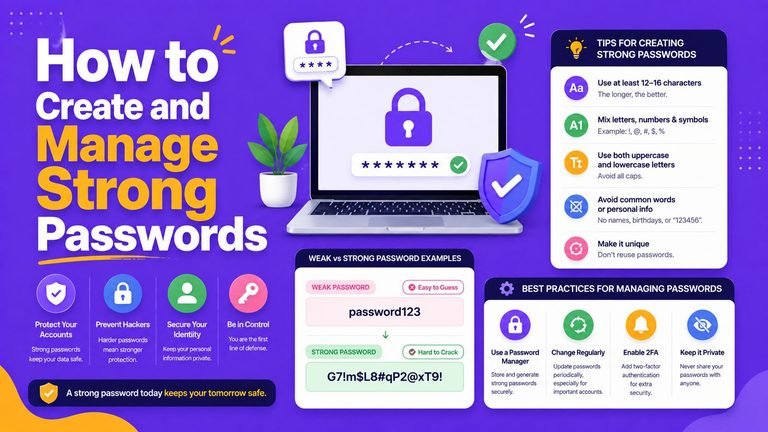
- Identity Management: Forms the baseline protection for master password vaults. Learn how to strengthen access credentials in our guide on How to Create and Manage Strong Passwords.
- Network Infrastructure: Secures corporate VPN tunnels, firewalls, and network perimeters. Learn how modern perimeter defense operates in our guide on 10 Best Ways Next Generation Firewall Protects Networks in 2026.
AES-256 Encryption vs. Password Hashing
A common misconception when studying how AES-256 encryption works is confusing encryption with hashing.
┌─────────────────────────────────────────────────────────────┐
│              Encryption vs. Hashing Comparison              │
├──────────────────────────────┬──────────────────────────────┤
│ AES-256 Encryption           │ One-Way Password Hashing     │
│ Two-Way Reversible Process   │ One-Way Irreversible Process │
│ Ciphertext ──► Plaintext     │ Plaintext ──► Fixed Hash     │
└──────────────────────────────┴──────────────────────────────┘
- Encryption (Two-Way): Designed to be completely reversible using the correct secret key ($\text{Plaintext} \leftrightarrow \text{Ciphertext}$).
- Hashing (One-Way): Designed to be irreversible. Stored password databases use salted hashes (e.g., Argon2 or bcrypt) rather than symmetric AES encryption so original passwords can never be extracted if a database is leaked.
Common AES-256 Security Myths
Understanding how AES-256 encryption works helps debunk several common industry myths:
- Myth 1: “AES-256 encrypts your data 256 separate times.” False. The number 256 refers strictly to the bit size of the encryption key.
- Myth 2: “AES-256 makes data completely un-stealable.” False. Attackers rarely break the mathematics of AES; instead, they steal unencrypted keys, compromise endpoints with malware, or use phishing scams. Learn to spot these attack vectors in our guide on 10 Best Ways to Spot Advanced Email Phishing Scams.
- Myth 3: “Only enterprise corporations need AES encryption.” False. Individual freelancers, small businesses, and growing startups all rely on AES to safeguard financial records and customer PII.
Complete AES-256 Security Checklist
Use this checklist to evaluate whether your software stack implements how AES-256 encryption works securely:
| Security Checklist Item | Operational Purpose | Verification Requirement |
| 1. Modern AES Mode | Ensures data integrity alongside privacy | Verify use of AES-GCM or AES-XTS |
| 2. Key Vault Isolation | Prevents key exposure during breaches | Store keys in dedicated HSMs or vaults |
| 3. Multi-Factor Authentication | Blocks unauthorized vault access | Enforce non-SMS MFA across accounts |
| 4. System Patching | Fixes endpoint vulnerabilities | Keep operating systems updated |
| 5. Immutable Backups | Protects against ransomware loss | Secure offline, encrypted backup copies |
For step-by-step guidance on evaluating your entire organization’s technical posture, follow our comprehensive Small Business Cybersecurity Audit Checklist.
Actionable Steps to Implement AES-256 Safely
Knowing how AES-256 encryption works enables tech teams and businesses to enforce best practices across their infrastructure:
- Enforce Strong Identity Verification: Encryption is only as secure as the authentication guarding the key. Implement multi-factor protection using our tutorial on How to Set Up Two-Factor Authentication.
- Harden Network Boundaries: Combine data-at-rest encryption with identity-centric perimeters using our roadmap for 10 Best Ways for Zero Trust Architecture Implementation in 2026.
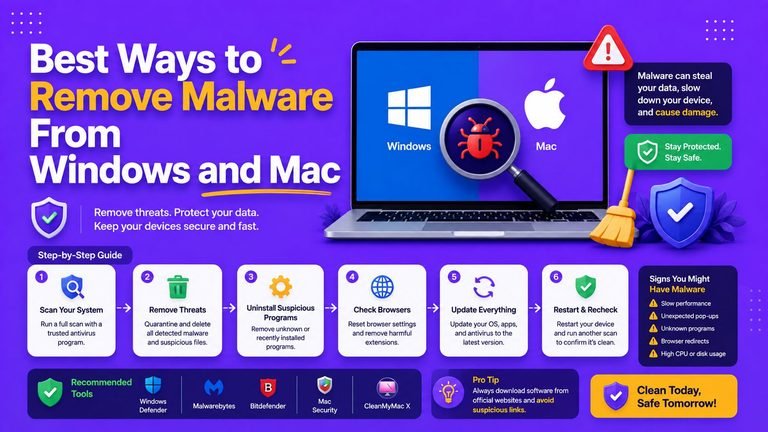
- Isolate Compromised Devices: If malware infects an endpoint, decrypting keys can be captured from memory. Learn how to clean compromised devices in our guide on how to Remove Malware From Windows and Mac.
- Master Security Fundamentals: Review core foundational concepts in our primer on Network Security Basics.
Final Thoughts
Understanding how AES-256 encryption works reveals why it remains the benchmark for digital data protection. By converting readable information into mathematical ciphertext through 14 processing rounds controlled by a 256-bit key, AES-256 ensures your files, database records, and network communications remain secure against brute-force attacks.
Remember that AES-256 encryption is one pillar of a complete security strategy. Complement your encryption controls with robust key management, non-SMS multi-factor authentication, routine patch updates, and trained staff to keep your business fully protected in 2026.
Frequently Asked Questions (FAQs)
How does AES-256 encryption work in simple terms?
Understanding how AES-256 encryption works comes down to recognizing that readable data is mathematically scrambled into unreadable ciphertext using a secret 256-bit key across 14 transformation rounds. Only someone with the exact matching key can decrypt the data back into its original form.
Is AES-256 encryption quantum-resistant?
Yes. While quantum computers utilizing Grover’s algorithm can theoretically reduce symmetric key security by half, a 256-bit key retains 128 bits of quantum security—keeping AES-256 computationally secure against future quantum computing threats.
Can AES-256 encryption be cracked by brute force?
No. A 256-bit key offers $2^{256}$ potential key combinations. Testing every combination would take modern supercomputers billions of years, making direct brute-force attacks practically impossible.
What is the difference between data encrypted at rest and in transit?
Data at rest refers to files stored on hard drives, cloud databases, or backup vaults (often protected by AES-256). Data in transit refers to information moving across networks (protected by TLS protocols that frequently utilize AES-GCM key exchange).
Share Your Experience
How do you implement how AES-256 encryption works within your technology stack? Do you utilize full-disk drive encryption, encrypted cloud storage, or password managers? Share your experiences, tips, and security questions in the comments below!





2 Comments